Do You Need to Be Flexible to Start Yoga? A Beginner’s Guide
Oct 1, 2026
by Scott Binder
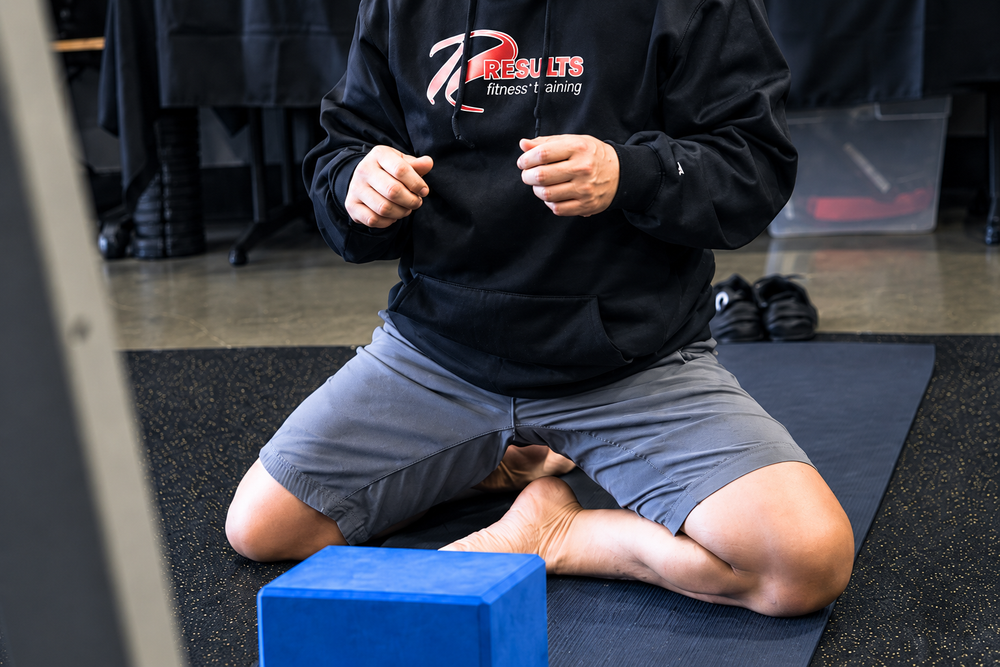
If you have ever looked at a yoga class and thought, “I’m not flexible enough for that,” you are exactly the kind of person who may benefit from giving yoga a try.
You do not need to be flexible before starting yoga.
Flexibility is something that can develop through regular movement and stretching. Yoga can also challenge balance, stability, body awareness, and strength depending on the poses and style of practice.
At Results Fitness Training in Camas, WA, Yoga classes are designed for different fitness levels, with modifications available so beginners do not need to arrive already knowing the poses or being able to touch their toes.
Here is what beginners should actually know before stepping onto the mat.
Why “I’m Not Flexible Enough” Gets Yoga Backward 🧘
Think about another form of exercise.
You would not say you need to become strong before you can start strength training. Strength training is one of the ways you develop strength.
Flexibility works similarly.
Stretching activities can improve a joint’s ability to move through its range of motion, according to the Physical Activity Guidelines for Americans. Yoga can incorporate flexibility work along with other types of physical activity.
So being stiff does not automatically disqualify you from yoga.
It may simply mean your starting positions, range of motion, and modifications look different from those of someone who has practiced for years.
The objective is not to make your pose look identical to someone else’s.
It is to work appropriately within your current ability.
What Actually Happens in a Yoga Class at Results Fitness Training?
Results Fitness Training describes its Yoga classes as a combination of mindful movement, breathwork, and grounding postures.
A typical session may include gentle warm-ups, flowing sequences, and restorative poses, with an emphasis on flexibility, balance, mindful movement, and recovery. The program is open to different experience levels.
That is important if your image of yoga comes primarily from advanced poses you have seen online.
Your first class does not require advanced flexibility.
The current Yoga, Stretch & Mobility classes at Results Fitness Training are specifically described as beginner-friendly, and modifications are provided to accommodate different fitness levels.
Yoga, Stretch, and Mobility Are Related, but They Are Not Identical
Results Fitness Training offers all three, and understanding the distinction can help you decide where to begin.
| Option | Main emphasis | It may appeal to you if |
|---|---|---|
| Yoga | Movement, postures, breathing, balance, and flexibility | You want a structured practice that combines physical movement with focused breathing |
| Stretch | Guided static and dynamic stretching | You primarily want dedicated time for flexibility and releasing everyday tightness |
| Mobility | Controlled functional movement and joint range | You want to improve how comfortably and deliberately you move through different ranges |
At Results Fitness Training, the Yoga sessions use flow-based sequences, while Stretch classes incorporate static and dynamic techniques. Mobility work emphasizes functional movement and joint range.
There is overlap, but the experience and emphasis are different.
What Can Yoga Realistically Help You Improve?
Yoga is not a cure-all, and its effects depend on the type of yoga, frequency, individual, and outcome being measured.
There is, however, evidence supporting several physical benefits.
A systematic review and meta-analysis of randomized trials involving older adults found yoga improved measures including balance, lower body flexibility, and lower limb strength compared with inactive controls. Some improvements also remained when yoga was compared with other active interventions.
A newer systematic review of randomized controlled trials in healthy participants also found significant improvements in balance, although evidence for outcomes such as bone mineral density remained inconclusive.
These findings are useful because they show why yoga should not be reduced to “stretching.”
Depending on the practice, maintaining a position, controlling transitions, and balancing your body can require muscular effort as well as flexibility.
How Yoga Can Complement Strength and Conditioning 💪
You also do not need to choose between yoga and more traditional workouts.
They can serve different purposes within the same fitness routine.
Results Fitness Training offers TRX, Bootcamp, Full Body HIIT, Kickboxing, Yoga, and Stretch, which gives members opportunities to combine strength and conditioning sessions with lower-intensity, movement-focused classes.
The CDC recommends that adults accumulate at least 150 minutes of moderate intensity aerobic activity each week, or an equivalent amount of vigorous activity, plus muscle strengthening activity on at least two days each week.
Yoga may contribute to your overall activity, and some yoga postures can be muscle strengthening. However, flexibility work by itself should not be considered a substitute for all recommended aerobic and strengthening activity.
That makes yoga useful as one part of a balanced routine rather than something that has to replace your other training.
A Realistic Example Week
There is no universal schedule that everyone needs to follow.
For a generally healthy adult who enjoys strength and conditioning but also wants dedicated time for movement and flexibility, a hypothetical week could look like this:
Monday: Strength or TRX training
Tuesday: Yoga
Wednesday: Walking or other moderate aerobic activity
Thursday: Bootcamp or strength training
Friday: Stretch or lighter movement
Saturday: Kickboxing, hiking, cycling, or another activity you enjoy
Sunday: Rest or easy movement
This is an example rather than an individualized prescription.
The important idea is that yoga does not have to compete with your other workouts. It can occupy a different place in your week.
Your First Yoga Class Checklist 🌿
If you have never taken a class, keep your first experience simple.
Wear clothes that allow comfortable movement. You do not need specialized yoga clothing.
Bring water and a towel. Results Fitness Training states that mats and other equipment are provided at the gym.
Tell the coach you are new. That gives the instructor useful context when demonstrating modifications.
Do not force your range of motion. A deeper stretch is not automatically a better stretch.
Use modifications. Changing a position to match your current ability is part of smart training, not a sign that you are doing the class incorrectly.
Pay attention to how movements feel. General muscular effort and stretching sensations are different from sharp or concerning pain.
If you have an injury, significant pain, a chronic health condition, or another medical concern that affects exercise, talk with an appropriate health professional about the types and amounts of physical activity that are suitable for you. The CDC specifically recommends professional guidance for people with chronic conditions or disabilities when appropriate.
Three Beginner Mistakes Worth Avoiding
Trying to Match the Most Flexible Person in the Room
Yoga is not a flexibility competition.
People arrive with different anatomy, training histories, experience, and ranges of motion.
Use the coach and your own body as your reference points, not the person on the mat beside you.
Forcing a Pose Because You Think Deeper Is Better
A pose does not become more valuable simply because you push farther.
Control matters.
If maintaining a smaller range allows you to breathe normally and stay in control, that may be the more appropriate variation for you.
Assuming Yoga Is Only for Recovery
Yoga can certainly be incorporated into a recovery-focused routine, but depending on the session, poses and transitions may also challenge balance, muscular control, and strength.
That is one reason yoga can complement other forms of training rather than simply functioning as a rest day.
Frequently Asked Questions
Can I do yoga if I cannot touch my toes?
Yes. Touching your toes is not a prerequisite for starting yoga. Begin within a comfortable range and use modifications when needed. Flexibility can change with consistent practice.
Is yoga enough exercise by itself?
That depends on the style of yoga and your overall activity. Current US physical activity guidelines recommend both aerobic and muscle strengthening activity for adults. Flexibility work alone does not fulfill those recommendations.
Should I choose Yoga, Stretch, or Mobility?
Choose based on what you want from the session. Yoga combines movement, postures, breathing, balance, and flexibility. Stretch provides more dedicated flexibility work, while mobility focuses on controlled joint movement. At Results Fitness Training, all three are designed to complement broader fitness training.
Is Results Fitness Training Yoga beginner friendly?
Yes. Results Fitness Training states that its Yoga, Stretch, and Mobility sessions welcome beginners and provide modifications for different fitness levels.
You Do Not Have to Get Flexible Before You Begin
Waiting until you are flexible enough for yoga is a little like waiting until you are strong enough to start lifting weights.
You can start where you are.
A well-coached class should give you room to learn the movements, understand your current range, use modifications, and gradually build confidence.
If you are in Camas and want to experience the difference between Yoga, Stretch, and the other coached classes, Results Fitness Training currently offers 3 free classes for new clients to explore the programs before choosing their next step.
